Don't miss our holiday offer - up to 50% OFF!


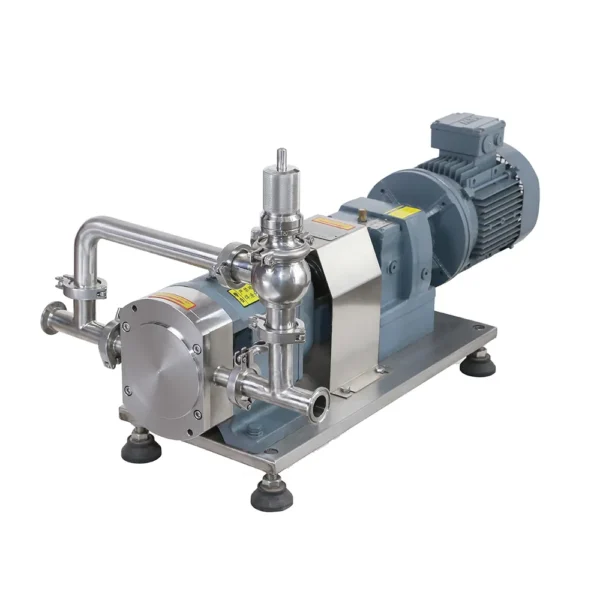
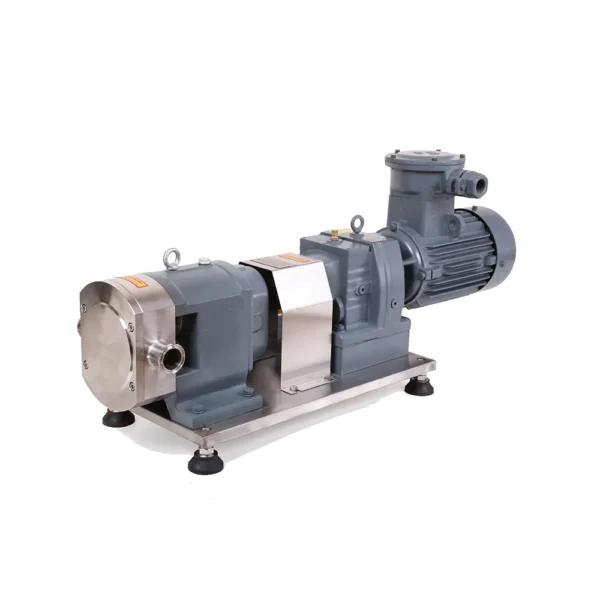
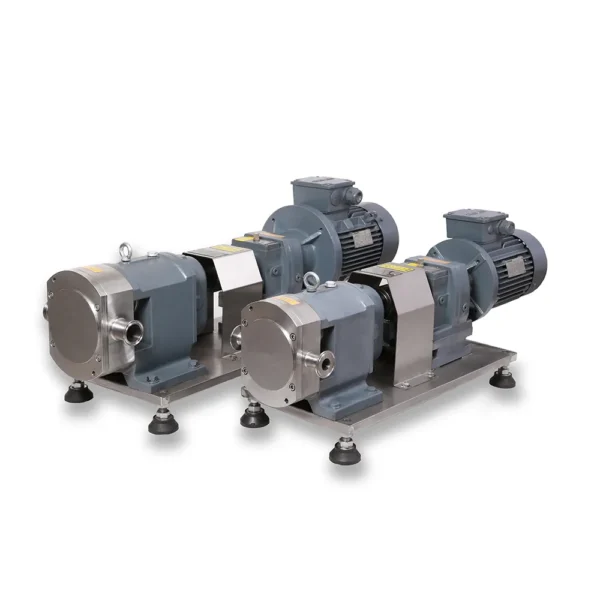
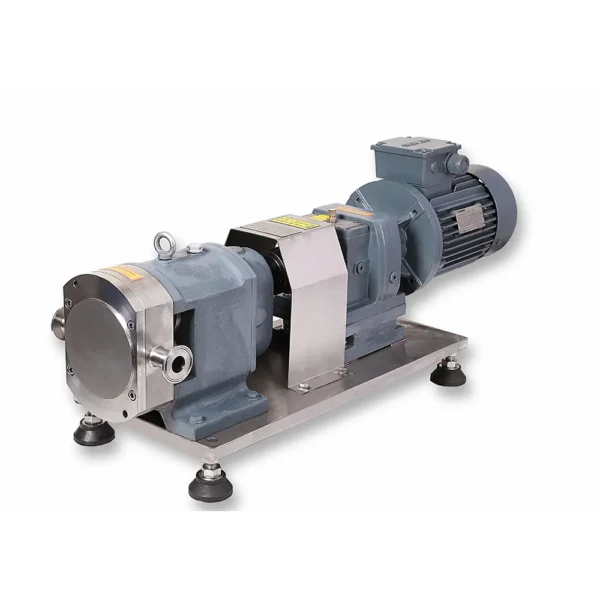
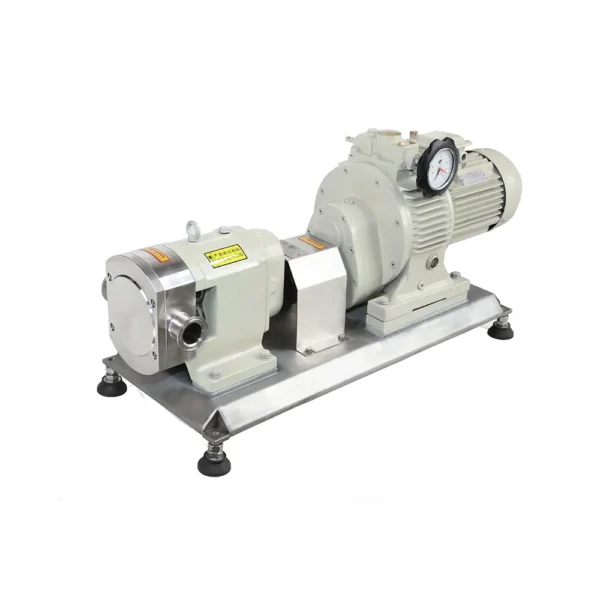
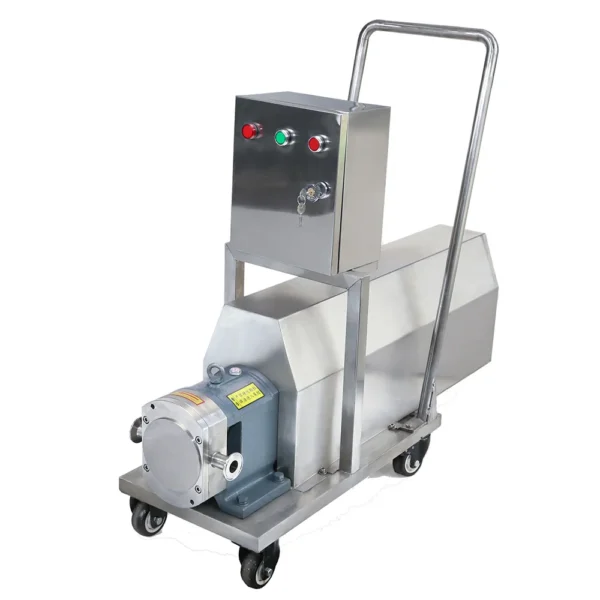
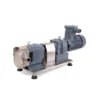
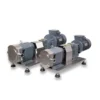
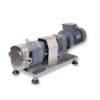
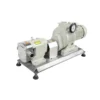
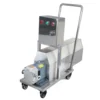
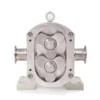
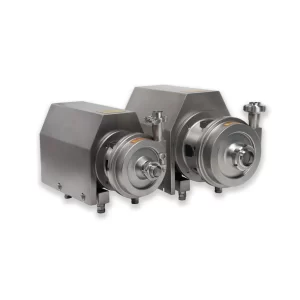
Stainless Steel Rotary Pump
A rotary pump is a positive displacement pump that uses a rotating mechanism such as gears, screws, or blades to capture and transport fluids.
Product Overview
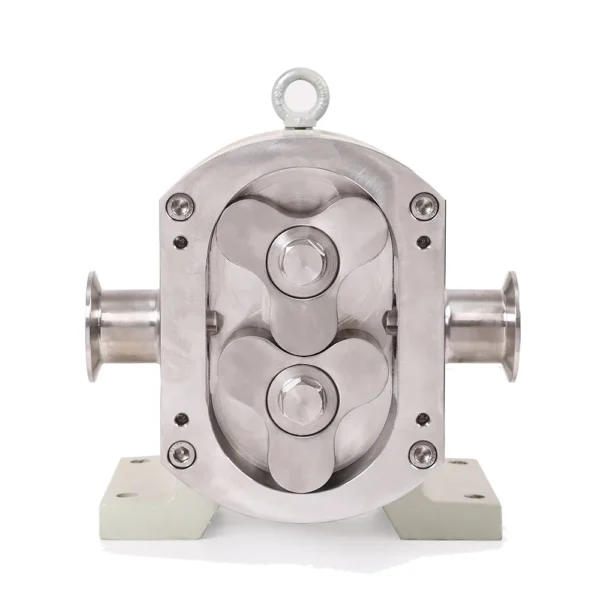
A rotary pump is a positive displacement pump that uses a rotating mechanism such as gears, screws, or blades to capture and transport fluids. As the rotor rotates, it creates an expanding cavity that draws fluid in from the inlet, transports it along the pump casing, and finally discharges it from the outlet. This means its flow rate does not change with back pressure. Because the volume of fluid transported per rotation is constant, it is ideal for transporting high-viscosity liquids such as oils and syrups, and provides a stable, pulsation-free flow rate.
Features
1. Rotary pumps do not have suction or discharge valves; their main working components are the pump casing and rotor (such as gears, screws, cams, etc.).
2. Compared to reciprocating pumps, rotary pumps have a rotating rotor, eliminating impact, allowing for higher speeds, a compact structure, and a smaller size.
3. Rotary pumps have lower discharge pressure and flow rates than reciprocating pumps, resulting in lower efficiency. They are generally only suitable for conveying small volumes of liquid and are mostly used as auxiliary equipment.
4. Most rotary pumps rely on the liquid they are conveying for lubrication, therefore they are generally suitable for conveying liquids that are lubricating and do not contain solid particles.
5. Rotary pumps also pump liquids intermittently; the flow rate fluctuations can be considered approximately uniform.
6. When conveying lubricating liquids, a liquid film exists on the rotor surface, giving the pump self-priming capability.
Transmission Forms
1. Motor + fix velocity ratio speed reducer: this form is simple that the rotor speed is constant So the flow is not adjustable. If frequency transformer is allocated, the speed adjustment can be achieved.
2. Motor + mechanical friction type stepless speed variator: the speed variation of this speed variator is realized through manual adjustment Itis characterized by safe and reliable operation, as well as stepless adjustable flow. The flaw is that it is non-automatic adjustment, which is difficult The speed adjustment can be available only when it works.
3. Frequency conversion motor + frequency converter: automatic adjustment of rotation speed can be realized in this way, and also stepless adjustment of flow can be realized. The advantage is a higher degree of automation and easy to operate. The drawback is the higher price and smaller low-speed torque.
Technical Parameter
| Specification
|
1T-100T, 0.55KW-22KW
|
| Materials
|
SUS304, SUS316L |
| Standards
|
Din, SMS |
| Impeller
|
Single impeller, double impeller, tri-impeller, multi-impeller, butterfly impeller
|
| Work condition
|
High-viscosity liquids such as oils and syrups
|
| Surface Treatment
|
Touch parts are polished, others are matte or sandblasting |
| Application
|
Dairy products, chocolate, malt extract, syrup, pudding, ketchup, oils, creams, gels, pill pastes, dyes, resins, polymers, etc. |
Reviews
There are no reviews yet.