Don't miss our holiday offer - up to 50% OFF!

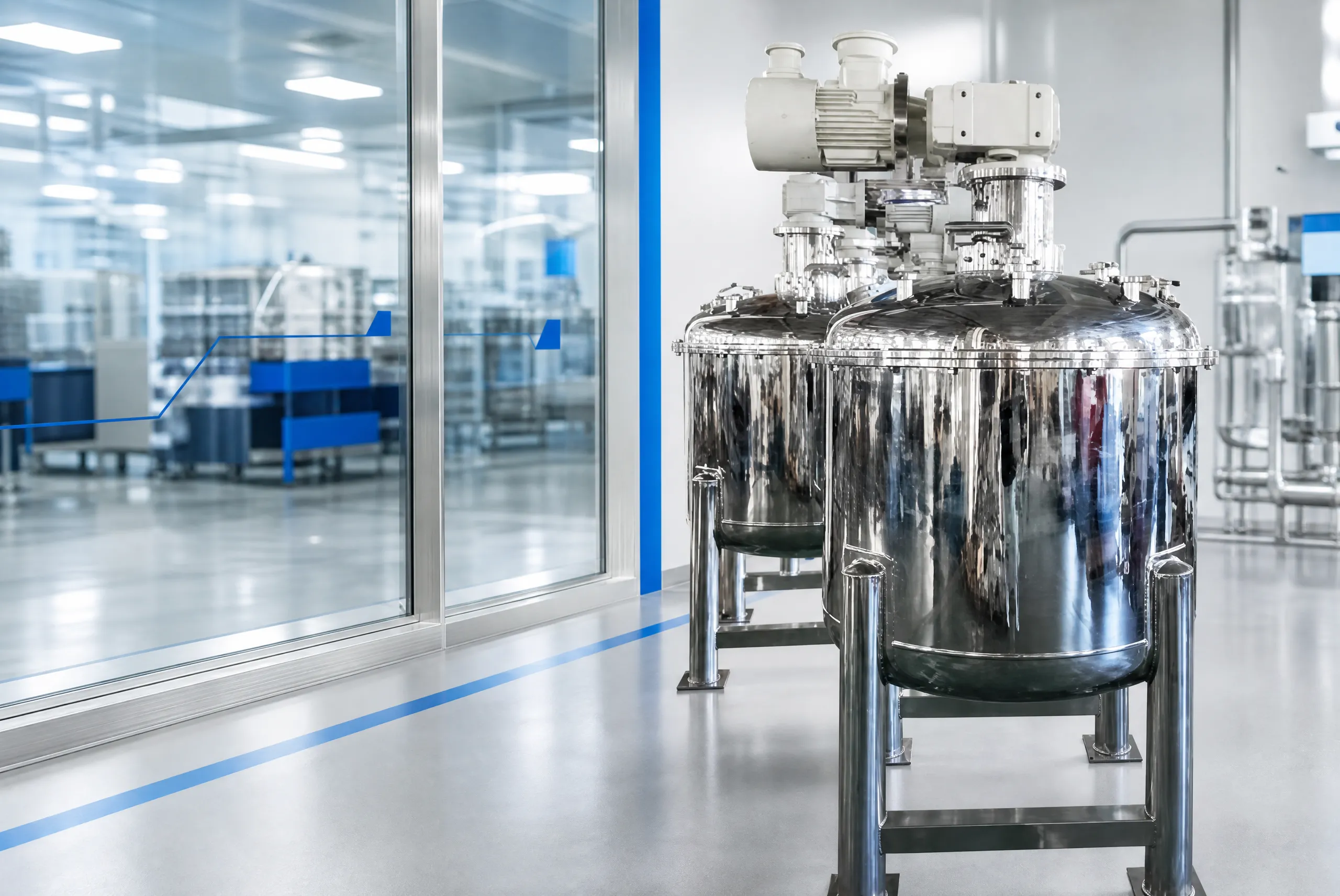
A stainless steel mixing tank is a versatile, widely used industrial container designed for blending, stirring, homogenizing, and processing liquid and semi-liquid materials across everyday and industrial scenarios. Unlike ordinary storage tanks that only hold substances statically, mixing tanks integrate sealed stainless steel vessels with mechanical stirring systems, enabling dynamic material processing such as mixing, dissolving, emulsifying, stirring, and even temperature-controlled blending.

Types of Mixing Tanks
Mixing tanks come in different styles to meet various industrial needs. According to the type of industry, there are many different kinds of mixing tanks you can buy. Here are a few of the most popular types:
1. Batch Mixing Tanks
Batch mix tanks are used for mixing a particular amount of material at a time, and are perfect for those industries that don’t run large volumes, or have flexibility in terms of their recipes/formulations. For example, food manufacturers who use specific recipes in producing their products, and pharmaceutical companies making specific formulations based on customer needs, rely on batch mixer tanks to meet these needs.
2. Continuous Mixing Tanks
Continuous Mix Tanks are used in many industries for mixing continuously and producing products. The types of operations that use Continuous Mix Tanks will typically be in high-demand; e.g. chemical, beverage and so on. This type of mixing tank provides uniformity of quality for long production runs. Production is more efficient using Continuous Mixing Tanks, and it minimizes downtime during production runs.
3. Agitated Mixing Tanks
Mixing Tanks with Agitation: Using mixers, agitators, or impellers within an agitated mixing tank allows for thorough and efficient mixing of the product being blended. The most common types of agitators used within a mixed tank are top-side entry, bottom-side entry, and side-side entry, depending on the types of materials being mixed and their desired consistency post-blending. Agitated mixing tanks can be used in any application requiring the ability to uniformly blend materials and maintain an even distribution of those materials throughout the mixed tank.
4. Non-Agitated Mixing Tanks
Non-agitated Mixing Tanks do not contain any mechanical agitation or/rather rely on external methods of mixing fluid through the use of gravity or by manual operations of the fluid(s) in question, etc. Simple mixing operations utilizies non-agitated mixing tanks typically in those industries where concerns over mechanical agitation of the fluids being mixed are present.
Advantage of stainless steel Mixing Tanks
The core advantage of stainless steel construction lies in its excellent corrosion resistance, oxidation stability, and hygienic performance. Stainless steel surfaces are smooth, non-sticky, and easy to clean and sterilize, which effectively prevents material residue, bacterial growth, and chemical contamination. This makes mixing tanks far more reliable than plastic or ordinary metal tanks for processing food, beverages, pharmaceuticals, cosmetics, and chemical solutions that require high purity and safety standards.
Equipped with internal agitators, including paddle, propeller, or turbine mixing structures, these tanks can evenly combine different raw materials, eliminate particle precipitation, and maintain consistent fluid concentration and texture. Many modern stainless steel mixing tanks are also upgraded with temperature control, pressure regulation, sealed stirring, and variable-speed operation functions. They can handle diverse processing needs, from simple ingredient blending to complex reactions, heating, cooling, and continuous circulation mixing.
Consistency
Modern mixing tanks have precise control systems designed to help maintain uniform mixing activity, resulting in the same level of quality for each production batch. It is absolutely critical that there is precision in quality assurance in industries such as pharmaceuticals or food manufacturing.
Customizability
Depending on your facility’s requirements, manufacturers can create customized mixing tanks. Manufacturers can offer mixing tanks for both small-scale, custom batching applications as well as large-scale mixing of products that require continuous mixing.
Versatility
Tanks for mixing are versatile and can serve several different industries or purposes. No matter if you’re mixing beverages, dairy products, chemicals, or pharmaceuticals; whether there are solids, liquids, or gases involved in your process; these tanks will work great!
Durability and Long Lifespan
These types of tanks can withstand extensive usage without becoming corroded or worn-down, which makes them an excellent long-term value due to their durability and ability to save money in maintenance and replacement costs.

Service industry
Thanks to their durability, high hygiene level, and stable mechanical performance, stainless steel mixing tanks have become standard equipment in numerous industries. In food and beverage production, they mix juices, syrups, dairy products, and brewing materials; in the pharmaceutical and cosmetic fields, they ensure sterile and uniform preparation of liquid medicines and skincare solutions; in chemical and environmental industries, they stir and dilute industrial reagents and treatment fluids. Whether for small-batch workshop production or large-scale automated industrial lines, stainless steel mixing tanks provide efficient, safe, and long-lasting material processing solutions, serving as essential infrastructure for modern manufacturing and daily product production.